





Spray consistency is one of the most important factors in achieving a professional paint finish. Whether working on residential interiors, commercial repainting projects, industrial coatings, or large-scale production painting, inconsistent spray patterns can lead to uneven coverage, wasted material, visible defects, and additional labor costs.
Many professional painters eventually search for an airless sprayer guide to improve spray consistency because even high-quality coatings can perform poorly when spray patterns become unstable or uneven.
Common spray consistency issues include:
- Uneven coverage
- Tailing spray patterns
- Striping
- Sputtering
- Pressure fluctuation
- Overspray problems
- Finish inconsistency
- Uneven sheen appearance
Fortunately, most spray consistency problems can be corrected through proper setup, spray tip selection, pressure adjustments, maintenance, and spraying technique.
Professional-grade airless spray systems are specifically engineered to help contractors maintain smoother spray patterns, better finish quality, and more consistent coating application across demanding projects.
Why Spray Consistency Matters
Consistent spray patterns are critical because they directly affect:
- Finish quality
- Productivity
- Material efficiency
- Labor costs
- Customer satisfaction
- Project timelines
Poor spray consistency often creates visible defects that require additional touchups or complete recoating.
In commercial and industrial painting environments, inconsistent spraying can significantly increase project costs and reduce overall efficiency.
Problems Caused by Poor Spray Consistency
Uneven Film Thickness
Inconsistent spray patterns may leave some areas too thin while others become over-applied.
Visible Striping
Uneven overlap patterns often create noticeable stripes or lap marks.
Excessive Overspray
Incorrect pressure settings may increase material waste.
Additional Labor Costs
Rework and touchups require additional labor time.
Poor Finish Appearance
Inconsistent spraying can create flashing, texture variation, and sheen differences. Maintaining smooth, even spray application is essential for achieving professional results.
Common Signs of Poor Spray Consistency
Many contractors first notice spray consistency problems when finish quality begins to decline.
Warning Signs of Inconsistent Spraying
- Tails at spray edges
- Uneven coverage
- Sputtering spray gun
- Pulsating spray pattern
- Heavy center pattern
- Dry spray appearance
- Excessive overspray
- Inconsistent sheen
- Drips or runs
- Visible texture changes
Recognizing these issues early helps prevent larger coating failures later.
What Causes Inconsistent Spray Patterns?
Several different factors can affect airless spray consistency. Some issues are mechanical, while others are related to setup, technique, or maintenance.
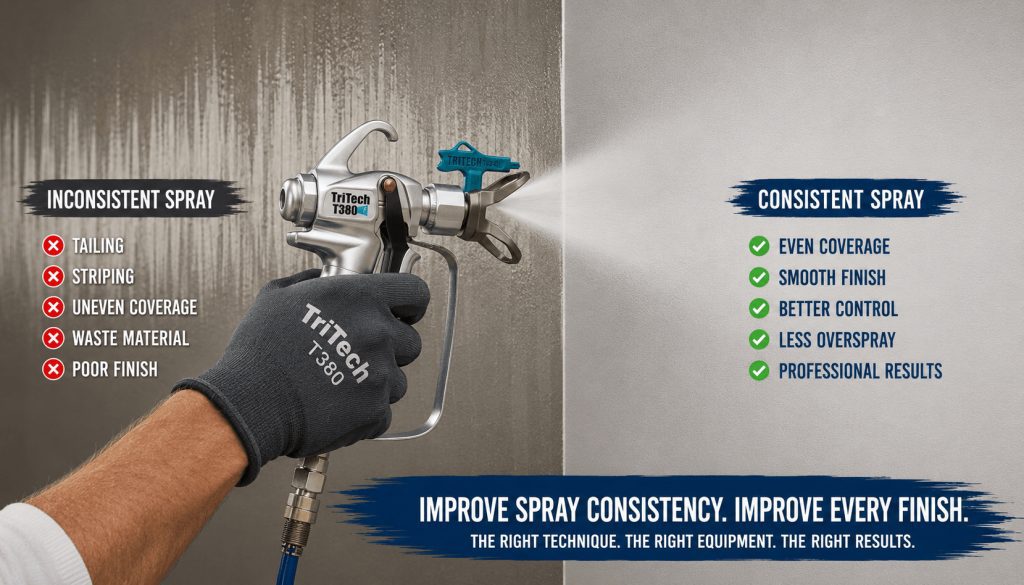
Visual Example of Poor vs Consistent Spray Patterns
This infographic highlights the difference between inconsistent spray application and a smooth, professional finish. Proper pressure settings, spray technique, overlap consistency, and equipment maintenance all play important roles in improving airless spray consistency and overall finish quality.
Common Causes of Spray Pattern Problems
Worn Spray Tips
Worn tips often create uneven fan patterns and excessive material output.
Incorrect Pressure Settings
Too much or too little pressure can destabilize the spray pattern.
Dirty Filters
Clogged filters restrict coating flow and create pressure fluctuation.
Pump Pulsation
Inconsistent pump pressure can create uneven application.
Improper Spray Technique
Poor overlap patterns may create visible striping.
Material Thickness Issues
Improperly mixed coatings may spray unevenly.
Hose Restrictions
Kinks or blockages can disrupt material flow.
Air Leaks
Leaks within the system may reduce pressure stability. Many contractors asking “how to improve airless spray consistency” are often dealing with one or more of these common issues.
How Pressure Settings Affect Spray Consistency
Pressure settings play a major role in spray quality. One of the most common causes of uneven spray patterns is incorrect pressure adjustment.
Problems Caused by Excessive Pressure
- Increased overspray
- Excessive bounce-back
- Dry spray
- Material waste
- Rough finish texture
Problems Caused by Low Pressure
- Tailing spray pattern
- Incomplete atomization
- Uneven coating
- Heavy edges
- Poor coverage
The goal is to use the lowest pressure possible while still achieving proper atomization. Professional contractors frequently fine-tune pressure settings throughout a project based on:
- Viscosidad del material
- Spray tip size
- Hose length
- Temperature conditions
- Desired finish quality
Choosing the Right Spray Tip
Spray tip selection is one of the most important factors in improving spray consistency. Different coatings require different spray tip sizes and fan widths.
Spray Tip Factors
Orifice Size
Controls material flow volume.
Fan Width
Determines spray pattern width.
Material Compatibility
Some coatings require larger or smaller tips.
Desired Finish Quality
Fine finish work may require narrower patterns. Using the wrong spray tip can create:
- Uneven atomization
- Heavy spray edges
- Poor transfer efficiency
- Finish inconsistency
Worn spray tips are also a major cause of inconsistent spray patterns.
Signs of a Worn Spray Tip
- Increased overspray
- Uneven fan pattern
- Higher material usage
- Heavy center spray
- Reduced finish quality
Replacing worn tips regularly helps maintain smooth, consistent spraying.
Spray Overlap Techniques for Smooth Finishes
Proper overlap technique is essential for achieving even spray coverage. Many airless spray finish problems occur because of inconsistent overlap patterns.
Best Overlap Practices
Maintain 50% Overlap
Each spray pass should overlap the previous pass evenly.
Keep Consistent Speed
Changing movement speed affects coating thickness.
Maintain Proper Distance
Spraying too close or too far affects atomization.
Keep the Gun Perpendicular
Arcing the gun creates uneven coverage.
Maintain a Wet Edge
This helps reduce visible transitions between passes.
Contractors searching for an airless sprayer guide to improve spray consistency often discover that the spraying technique alone can dramatically improve finish quality.
Why Proper Sprayer Maintenance Matters
Maintenance is critical for maintaining consistent spray performance. Even high-quality spray equipment can develop problems if filters, pumps, or spray components are neglected.
Important Airless Sprayer Maintenance Tasks
- Clean filters regularly
- Flush hoses after use
- Replace worn spray tips
- Inspect seals and fittings
- Check pump performance
- Clean spray guns thoroughly
- Remove dried material buildup
Proper maintenance helps prevent pressure instability and uneven coating application.
Maintenance Problems That Affect Spray Consistency
Dirty Filters
Restricted flow creates unstable spray patterns.
Pump Wear
Worn pumps may pulse unevenly.
Dried Paint Buildup
Material restrictions reduce atomization quality.
Damaged Hoses
Flow interruptions may occur. Regular maintenance helps improve both finish quality and equipment longevity.
How Filters Affect Spray Quality
Filters play a major role in spray consistency. Many contractors underestimate how much dirty or clogged filters affect spray performance.
Types of Airless Sprayer Filters
Gun Filters
Prevent debris from reaching the spray tip.
Manifold Filters
Help regulate material flow.
Inlet Filters
Protect the pump from contamination. When filters become clogged, contractors may experience:
- Pressure fluctuation
- Sputtering
- Tailing spray patterns
- Reduced atomization
- Uneven finish appearance
Regular filter cleaning is one of the simplest ways to improve spray consistency.
Material Selection and Spray Consistency
Coating quality also affects spray performance. Low-quality coatings may contain inconsistent pigments or fillers that affect atomization and finish quality.
Better Coatings Typically Provide
- Improved hide performance
- Smoother atomization
- Better leveling
- Reduced clogging
- More consistent finish appearance
According to the EPA coatings and paint guidance, high-quality coatings and proper application methods can improve both finish performance and coating durability.
Airless Sprayer Cleaning Tips
Cleaning procedures directly affect long-term spray consistency. Poor cleaning habits often lead to:
- Dried paint buildup
- Pressure instability
- Restricted material flow
- Spray gun clogging
Best Cleaning Practices
Flush the System Thoroughly
Remove all coating material after use.
Clean Filters Regularly
Dirty filters reduce spray quality.
Inspect Spray Tips
Check for wear or buildup.
Store Equipment Properly
Protect hoses and components from damage.
Use Proper Cleaning Solutions
Different coatings require different cleaners. Many contractors experiencing uneven spray patterns are actually dealing with cleaning-related restrictions inside the system.
Best Practices for Improving Finish Quality
Achieving a smooth professional finish requires a combination of:
- Proper equipment
- Correct pressure
- High-quality coatings
- Proper maintenance
- Skilled spraying technique
Best Practices for Spray Consistency
- Use the correct spray tip
- Maintain proper pressure
- Replace worn components
- Keep filters clean
- Maintain even overlap
- Use high-quality coatings
- Clean equipment thoroughly
- Monitor spray patterns regularly
Professional spray systems are specifically engineered to support smoother, more consistent coating application on demanding projects. TriTech Industries Airless Spray Guns
Why Professional Contractors Use High-Quality Spray Equipment
Professional contractors understand that equipment quality directly impacts finish consistency and productivity.
Low-quality spray equipment often struggles to maintain stable pressure and consistent atomization during long production runs.
Benefits of Professional Airless Spray Equipment
- Improved pressure stability
- Better atomization
- Reduced pulsation
- Consistent spray patterns
- Improved finish quality
- Better durability
- Increased productivity
Commercial painting contractors frequently rely on high-performance spray systems to maintain production efficiency and coating consistency across large projects.
Improve Spray Consistency and Finish
For contractors and painters searching for an airless sprayer guide to improve spray consistency, the key is understanding that finish quality depends on multiple factors working together.
Consistent spraying requires:
- Proper pressure settings
- Correct spray tips
- Quality coatings
- Clean filters
- Proper overlap technique
- Equipment maintenance
- Stable spray equipment
Even small adjustments can dramatically improve finish consistency and reduce costly rework.
Professional-grade airless spray systems can help contractors improve efficiency, reduce overspray, and maintain smoother coating application across residential, commercial, and industrial painting projects.
TriTech Industries manufactures professional airless spray equipment engineered for demanding commercial and industrial painting environments where spray consistency, finish quality, and long-term performance matter.
Comentarios recientes